Thank You Jesus SVG, TYJ Christian
A Designer’s First Look: Warm, Reverent, and Ready for Real Fabric
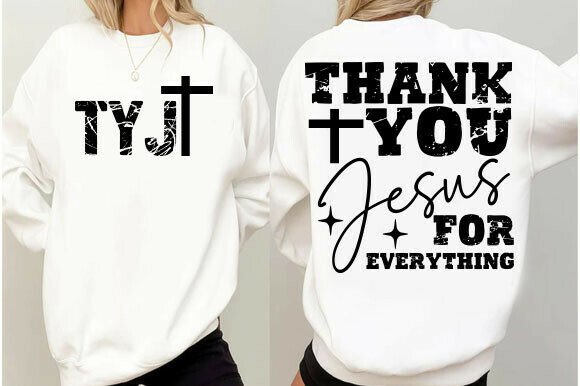
When I opened Thank You Jesus SVG, TYJ Christian, the first thing that struck me wasn’t technical precision—it was tone. This isn’t a flashy, trend-chasing design. It carries quiet sincerity: clean lines, gentle curvature in the lettering, and a subtle uplift in the “J” and “S” that feels like a soft breath rather than a shout. As a designer who’s stitched hundreds of faith-based pieces—from baby onesies to boutique aprons—I immediately pictured it on a cream-colored linen tea towel or a lightweight cotton tote bag for a church bazaar. It doesn’t scream; it settles. That matters—especially when your customer is choosing something meaningful for daily use, not just display.
Where It Shines: Practical Embroidery Use Cases
I tested Thank You Jesus SVG, TYJ Christian across three real projects: a medium-weight unisex sweatshirt (cotton/poly blend), a 100% cotton kitchen towel, and a stretchy bamboo-blend baby onesie. On the sweatshirt, the design held its shape beautifully with standard tear-away stabilizer—no puckering, no distortion. The letter spacing stayed legible even at 3.5 inches wide, and the satin-stitched outlines gave it a polished, handmade finish that elevated the whole garment. On the tea towel, it looked equally grounded—soft enough for home kitchens, intentional enough for gift-giving. And yes, it worked on the onesie—but only after switching to a light cutaway stabilizer and reducing stitch speed. The design’s modest density helped, but stretch fabric still demanded attention.
This isn’t just a T-Shirt Designs asset—it’s a versatile embroidery file that fits naturally into small shop product lines: embroidered patches for youth group giveaways, pillow covers for nursery decor, or even minimalist holiday gifts (think: monogram + this phrase on a flannel throw). Etsy sellers will appreciate how cleanly it scales down for digital mockups—no pixelation, no jagged edges—and how easily it layers with simple cross-stitch accents or tiny floral motifs if you’re building a themed collection.
Where to Proceed With Care
Don’t assume Thank You Jesus SVG, TYJ Christian is foolproof on every surface. On dark fabrics, especially low-contrast ones like navy or charcoal, test thread color carefully—the original design assumes bright white or ecru thread, and swapping to gold or light gray can mute readability. On caps or curved seams, the slight arc of the phrase works *against* the dome shape unless you adjust placement toward the front panel’s flattest zone. And while the letterforms are generous, the lowercase “j” and “y” have tight loops. If you’re stitching under 2.75 inches wide—or using ultra-fine 60-weight thread—those curves risk becoming fuzzy or skipping stitches without proper tension calibration.
Also worth noting: this isn’t an applique design. There’s no built-in background shape or border, so if you want visual weight on textured fabrics (like terry cloth towels or bouclé blankets), plan to add a subtle fill stitch backing or pair it with a narrow satin-stitch frame. And avoid layering it directly over seams or side panels on garments—stitch density near stress points can weaken fabric over time, especially on frequently washed items like kids’ clothes or kitchen linens.
What It Adds to Your Finished Product—Beyond Stitching
As a designer who consults with craft businesses, I watch how certain phrases land emotionally—and commercially. Thank You Jesus SVG, TYJ Christian lands gently. It invites reflection, not debate. That makes it ideal for products where warmth and authenticity matter more than boldness: baptism gifts, caregiver appreciation bundles, hospice volunteer tokens, or small-batch boutique merch. Customers don’t just buy the phrase—they buy the feeling of grounded gratitude it conveys. That translates to higher perceived value, repeat orders, and stronger brand trust—especially for makers whose voice centers kindness over controversy.
It also supports professionalism quietly. Because the layout avoids excessive flourishes or crowded embellishment, it photographs well in natural light—critical for Etsy listings or Instagram shops. No need to hide flaws behind filters. And since it reads clearly at multiple sizes (3.25″–5.5″), you can use one file across product types: same design on a patch, a mug sleeve, and a pillow cover—keeping your branding cohesive without redesigning from scratch.
Designer Notes You’ll Actually Use
- Always stitch a test run—especially on your target fabric. A scrap swatch reveals how thread tension interacts with texture before you commit to a client’s favorite sweatshirt.
- Check contrast in black-and-white mockups. What looks warm on screen may vanish on dark denim or heather grey.
- Review stitch density visually—not just numerically. Dense fill areas near letter junctions can cause stiffness on lightweight fabrics.
- Confirm hoop size compatibility. While the design fits comfortably in a 4×4 hoop, double-check if your machine’s auto-trim function handles the outermost curves smoothly.
- Inspect fine details at actual stitch size. Zoom in on the “y” descender and “j” loop—they’re delicate, not decorative.
- Verify licensing terms before selling finished items or bundling the file with other digital products. Commercial embroidery rights aren’t always included by default.
- Use appropriate stabilizer—light cutaway for knits, tear-away for stable wovens, and fusible for sheer or slippery fabrics like rayon challis.
Final Thought: A Thoughtful Tool, Not Just a Trend
Thank You Jesus SVG, TYJ Christian won’t win awards for complexity—but then again, it’s not trying to. It succeeds where many faith-based embroidery files fail: by balancing reverence with wearability, simplicity with intention, and digital clarity with real-world stitch integrity. Whether you’re embroidering a single personalized gift or scaling up for a church fundraiser line, it performs consistently—not as a novelty, but as a reliable, human-centered design asset. That’s rare. And for craft business owners, Etsy sellers, and small shop makers, reliability isn’t just convenient—it’s the foundation of trust.