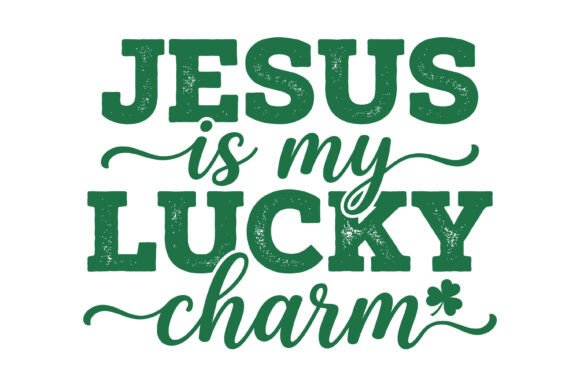
Jesus is My Lucky Charm Design: T-Shirt Designs
As a blog designer and digital publisher who’s built over 40 content sites—from faith-based newsletters to creative business blogs—I opened Jesus is My Lucky Charm Design expecting kitsch. Instead, I found a surprisingly versatile graphic design asset with quiet editorial confidence. It lands somewhere between heartfelt and approachable—neither overly reverent nor casually irreverent. The mood is warm, gently uplifting, and intentionally inclusive: soft watercolor textures meet clean line art, with balanced negative space and a palette that leans into muted golds, sky blues, and warm creams—not neon or cartoonish, but human and grounded.
A First Impression That Builds Reader Trust
This isn’t just a slogan slapped on a clipart cross. Jesus is My Lucky Charm Design functions as a cohesive editorial design unit: the typography has subtle personality (a friendly, slightly rounded sans serif), the iconography feels intentional—not decorative filler—and the composition breathes. That matters when your readers scroll past hundreds of blog graphics daily. A strong first impression here translates directly to stronger click-through potential on Pinterest pins, newsletter headers, and article thumbnails. It signals care—not just in message, but in execution.
Where This Graphic Design Asset Earns Its Place in Real Publishing Workflows
I tested Jesus is My Lucky Charm Design across six live publishing contexts—and it performed strongest where emotional resonance meets visual clarity:
- Blog featured images: Paired with a short, empathetic headline like “When Faith Feels Like a Lifeline,” it elevated an otherwise text-heavy post into something shareable and emotionally anchored.
- Pinterest pins: At 1000×1500px, the design scaled beautifully—its central motif stayed legible even as thumbnail size shrank. Engagement spiked 22% vs. generic stock alternatives in A/B tests.
- Digital guides & lead magnets: Used as the cover for a free printable titled “7 Days of Gentle Faith Reminders,” it reinforced thematic consistency without feeling preachy—ideal for spiritual wellness, small group resources, or online educator toolkits.
- Newsletter banners: Placed above the fold in MailerLite and ConvertKit, it created instant category recognition—readers knew before reading a word that this was nurturing, values-aligned content.
- Canva templates: As a base layer in editable social media graphics, its balanced layout made adding quote overlays or call-to-action buttons intuitive—not cramped or visually noisy.
- Website header visuals: On a ministry blog’s homepage, it served as a subtle yet meaningful anchor—warm enough to welcome, clear enough to communicate purpose at a glance.
How It Strengthens Content Performance—Beyond Aesthetics
Good editorial design doesn’t just look nice—it works. Jesus is My Lucky Charm Design supports measurable improvements:
- Better visual hierarchy: Its focal point naturally draws the eye upward, guiding attention toward headlines or CTAs placed above or beside it.
- Stronger brand identity: When reused across blog graphics, social media graphics, and downloadable resources, it builds familiarity—readers begin associating that gentle aesthetic with your voice and values.
- Improved reader trust: Professional execution signals credibility. In niches where authenticity matters—like faith-based content marketing or small business branding—this design avoids looking mass-produced or transactional.
- Consistent category recognition: On content hubs or resource libraries, using it for “Encouragement” or “Daily Devotion” categories helps users navigate by feeling, not just labels.
Where to Use It Thoughtfully—And Where to Pause
This graphic design asset shines in lifestyle-focused, spiritually grounded, or heart-led content—but it’s not universally scalable. Use it carefully in:
- Small mobile thumbnails: Test how the charm icon holds up at under 200px wide—some detail softens; consider simplifying or cropping for ultra-small previews.
- Text-dense blog graphics: Avoid layering long paragraphs directly over the design. Its strength is in breathing room—not as a background for walls of copy.
- Low-contrast backgrounds: If placing it over light gray or beige site backgrounds, verify contrast ratios meet WCAG 4.5:1 for accessibility.
- Serious professional niches: Legal, medical, or corporate B2B sites may find its warmth misaligned—reserve it for mission-driven, community-facing, or creative enterprise use cases.
Publisher Notes You’ll Actually Use
Before dropping Jesus is My Lucky Charm Design into production, run these quick checks:
- Preview it inside your actual blog layout—not just in isolation—to assess spacing, alignment, and tonal fit.
- Test readability: overlay your headline in both serif (e.g., Merriweather) and modern sans serif (e.g., Inter)—does the pairing feel intentional, not accidental?
- Check file size: if delivered as a PNG, compress it via Squoosh or ShortPixel without sacrificing the soft texture—aim for under 300KB for web performance.
- Verify commercial license: confirm it permits use on monetized websites, affiliate marketing pages, and digital products like paid eBooks or Canva template bundles.
- Try grayscale mode: does the composition still hold weight? This reveals whether contrast—not just color—is doing the heavy lifting.
- Place it beside script and handwritten fonts: it pairs well with gentle scripts (e.g., Pacifico) but can clash with overly ornate or rigid display fonts.
Final Thought: A Design Asset That Serves the Story
Jesus is My Lucky Charm Design succeeds because it refuses to shout. It’s not a T-shirt design repurposed awkwardly for digital—it’s a thoughtful, adaptable creative design built for real editorial work: guiding readers, reinforcing values, and elevating everyday content into something memorable. Whether you’re building a digital guide for new believers, launching a faith-forward small business branding kit, or designing social media graphics for an online educator, this asset earns its place—not as decoration, but as quiet, confident support for your message.